 Screenshot Quarterly
Games, framed
Screenshot Quarterly
Games, framed
Reviewed over 38 hours across four weeks. Every figure below comes from a frame log kept during play.
Screenshot Quarterly
Games, framed
Reviewed over 38 hours across four weeks. Every figure below comes from a frame log kept during play.
Twelve exposure controls, a genuine focal length slider, roll, tilt and a shutter that respects motion. Also a continent lit by one enormous overcast sky that never changes, in which nine hundred and one frames produced eleven worth keeping.
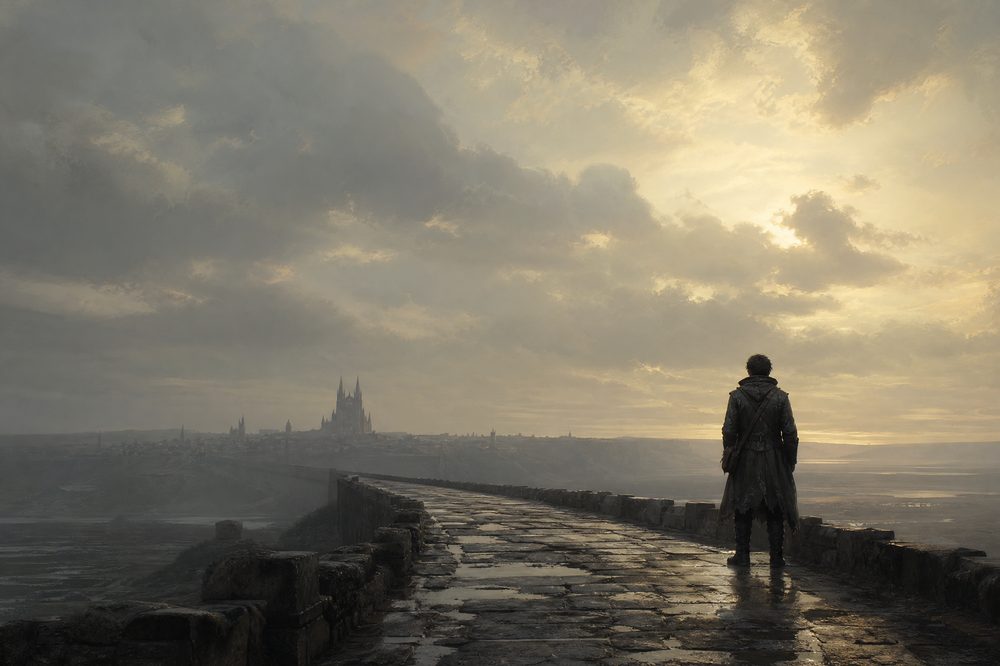
There is a moment about four hours into Causeway where you crest a ridge, see the estuary open out below with the cathedral city on the far bank, and reach for the photo mode key with real anticipation. The tools that open are the most complete set any game has shipped this year. And the frame you take will look almost exactly like the frame you took ninety minutes earlier on a different ridge, because the light has not changed and will not change.
This review is about that gap. Not a failure of technology, and not a failure of art direction in any conventional sense — the world is handsome, coherent and enormous. It is a failure of variation, and it turns the best photographic toolkit of the year into an expensive way of taking the same photograph nine hundred times.
Start with the focal length slider, because almost nothing has one. Causeway offers 18mm to 200mm and means it: at the long end the estuary genuinely compresses, the far bank climbs up behind the near bank, and the haze stacks into distinct bands. This is the single most useful photographic control a game can offer and it is present here in full.
Aperture is real too, with a focus plane you place by looking rather than by dragging a slider. Exposure is separated properly into shutter and sensitivity, so a long shutter smears the rain and a fast one freezes it. Roll is unclamped, which sounds trivial until you have tried to level a horizon in a game that will only give you fifteen degrees.
The interface is also unusually careful. Every control can be hidden with one key, the frame counter can be turned off, and the game pauses completely — no drifting cloth, no bobbing grass, no character breathing out of position between the composition and the capture.
Causeway has one weather state. It is a high, even, luminous overcast, and it is beautiful for approximately the first three hours. It is also the flattest lighting condition available to a landscape photographer, and the game applies it to every square kilometre of a continent at every hour of a very long play.
The consequence is that no frame in this game has a shadow worth the name. Nothing separates a foreground plane from a middle distance except aerial haze, which the long lens does render beautifully, but haze is a monotone gradient and a gradient cannot carry a composition on its own. Six hundred of the nine hundred and one frames in the log are structurally identical: dark land at the bottom, pale sky above, one figure somewhere.
A photo mode is a set of decisions a game lets you make. A lighting model is the set of decisions the game has already made for you. The second one is larger.
The time-of-day slider makes this worse rather than better, because it exists. Drag it and the overcast warms very slightly for about forty minutes of simulated evening. There is no golden hour here, no low sun, no long shadows, and nothing that resembles the transition the slider implies. Having the control and not having the phenomenon is more frustrating than having neither.
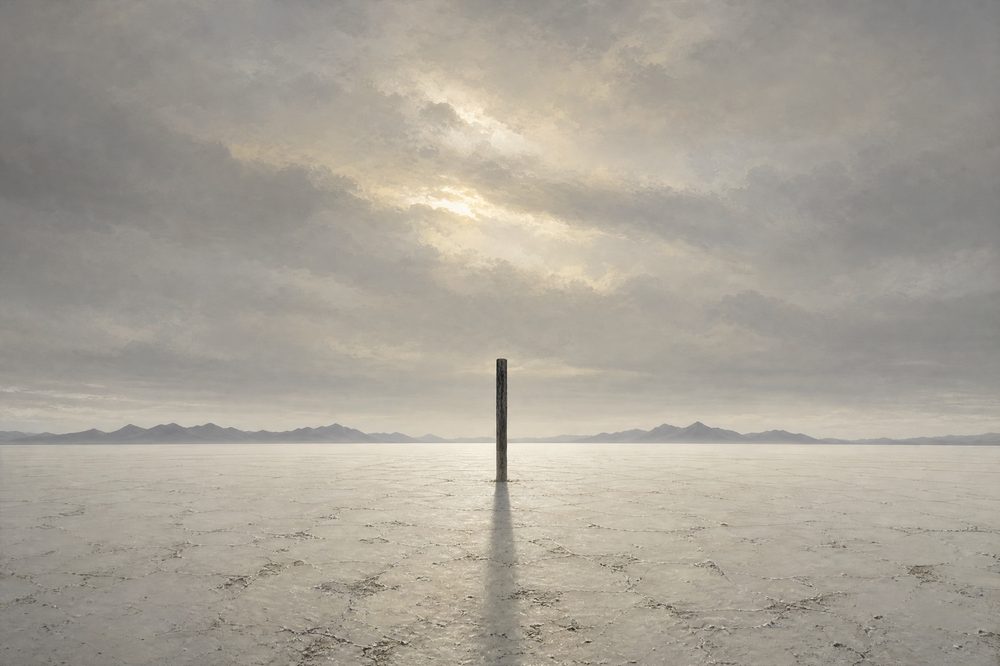
Every frame in the log is reviewed a week after it was taken, with no memory of the session, and either kept or discarded. Causeway kept eleven of nine hundred and one, which is the worst ratio in eleven issues by some distance. What the survivors have in common is instructive.
Nine of the eleven contain a strong physical line — the causeway itself, a sea wall, a jetty, a road cutting. Seven of them are near-silhouettes taken at the long end, where the compression does enough structural work to survive the absence of light. Two are close portraits of stonework, where the overcast is actually an asset because it renders texture without competing with it.
Not one of the eleven is a wide landscape, which is what the game is built to show you and what six hundred of the frames attempted.
| Frame type | Taken | Kept | Rate |
|---|---|---|---|
| Wide landscape | 604 | 0 | 0% |
| Long-lens compression | 142 | 7 | 4.9% |
| Architectural detail | 88 | 2 | 2.3% |
| Figure in landscape | 51 | 2 | 3.9% |
| Interior | 16 | 0 | 0% |
A zero in the top row of that table, from six hundred attempts, is the review in one figure.
Nothing, and that is worth crediting. The photo mode opens instantly, pauses everything, has no cooldown, cannot be interrupted by an enemy, and does not disable itself in any location I found across thirty-eight hours. There is no penalty for stopping and no limit on how long you stop for.
Compare Switchback Pass, which refuses to let you stop at all, or Ninth Precinct, which will not hide its own frame counter. Causeway gets the ergonomics almost perfectly right, which is precisely why the lighting is so frustrating: every obstacle between you and the image has been removed except the one that matters.
That an even overcast is a legitimate artistic choice, and that judging a deliberately muted world by how many dramatic photographs it yields is a category error. This is a fair objection and I have thought about it for four weeks.
The answer is the time-of-day slider. A game committed to one atmospheric register would not ship a control that promises variation and delivers forty minutes of slightly warmer grey. The slider is an admission that variation was intended, and the world is what happened instead. That is not a muted vision being misjudged; it is an unfinished lighting model with an excellent camera bolted to it.
The secondary answer is the two kept interiors — there are none, from sixteen attempts, because the interiors are lit by the same sky through windows and are therefore also flat. A game making a genuine choice about mood would have used its interiors to contrast with it.
Less than you would expect, which is the last thing worth saying. Causeway is a decent, slow, unhurried exploration game and the flat light suits the walking perfectly well. Nobody who never opens the photo mode will feel that anything is missing.
But the game has shipped twelve photographic controls, a tutorial for them, and a dedicated key on the default binding. It has made a claim about its own images. This publication exists to test that claim, and on this occasion the claim is not supported by the sky.
The most complete photographic toolkit in any game this year, including a real 18–200mm range and unclamped roll, attached to a continent with a single flat overcast and a time-of-day slider that changes almost nothing. Nine hundred and one frames yielded eleven, none of them the wide landscapes the game is built to show. Excellent camera, unfinished sky, and the clearest demonstration this quarterly has yet published that tools cannot generate light.
Logged at the time of capture with focal length, subject type and location. Eleven survived review a week later.