 Screenshot Quarterly
Games, framed
Screenshot Quarterly
Games, framed
A running piece rather than a finished one. Revised whenever a new frame log makes it wrong.
Screenshot Quarterly
Games, framed
A running piece rather than a finished one. Revised whenever a new frame log makes it wrong.
Across fourteen games and nearly five thousand logged frames, the images still worth keeping a week later contain markedly less than the images discarded. Photo modes, almost without exception, are built to help you put more in.
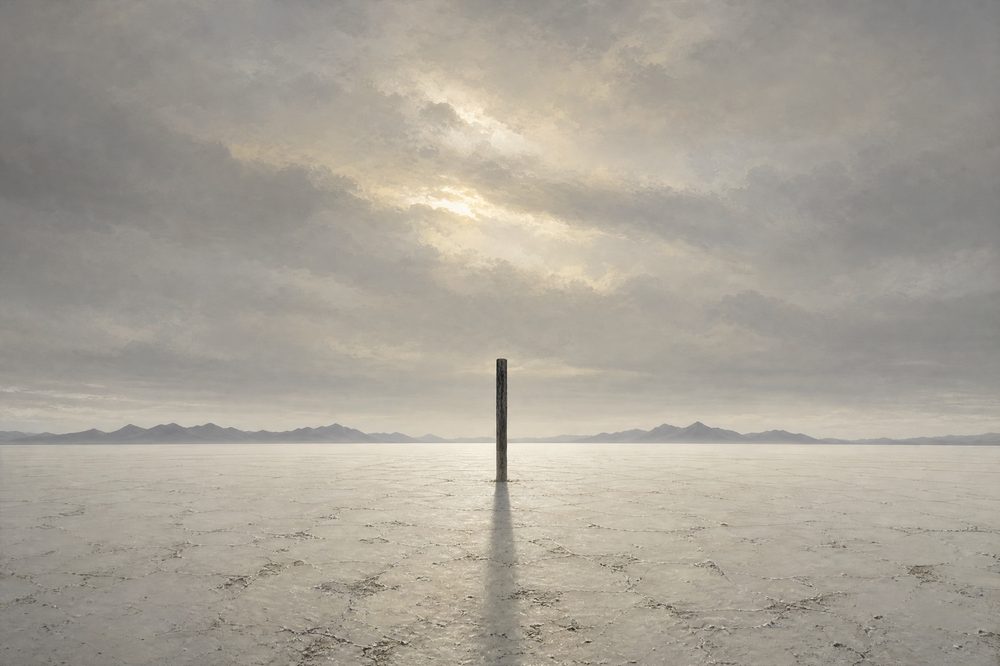
The frame above has four elements in it. A post, a shadow, a ground plane and a sky. It came from a game with eighty-one square kilometres of nearly featureless flat and a photo mode of no particular distinction, and it is one of eight keepers from ninety-eight attempts — a rate that beat every game in the issue except one.
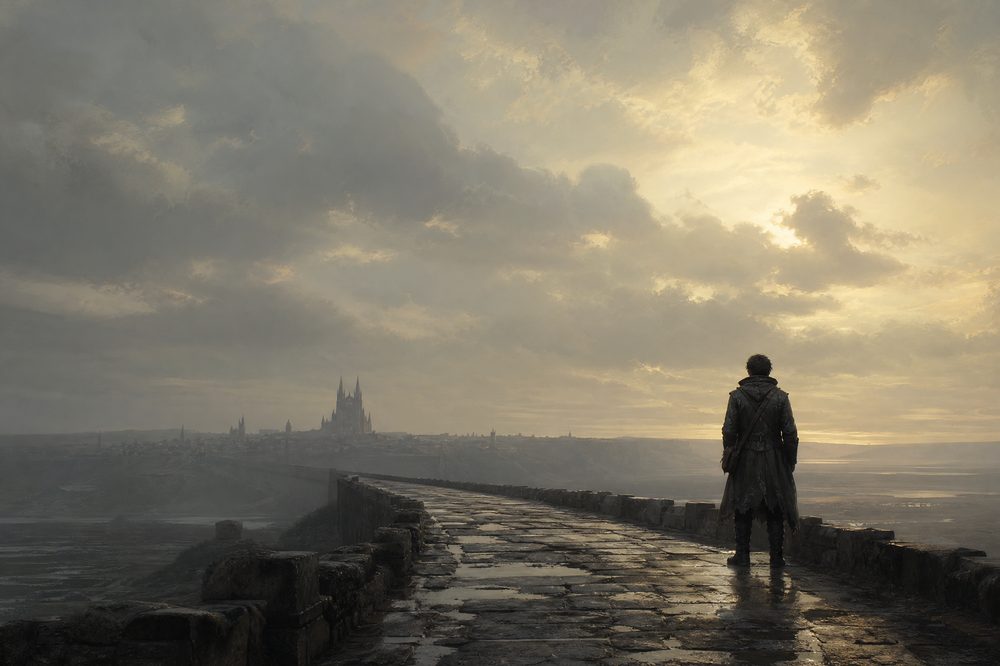
Meanwhile Causeway, with the best photographic toolkit shipped this year, produced six hundred and four wide landscapes containing an estuary, a cathedral city, a causeway, a figure, weather effects and a sky, and kept none of them. Not one. That contrast has been sitting in the log for four weeks and this piece is an attempt to explain it.
Every kept frame across three issues has been classified by how many distinct elements it contains, where an element is anything a viewer would name if asked to describe the image. A post is one. A cathedral is one. A crowd is one.
| Elements in frame | Frames taken | Kept | Rate |
|---|---|---|---|
| Two or three | 388 | 47 | 12.1% |
| Four or five | 1,204 | 92 | 7.6% |
| Six to eight | 1,879 | 61 | 3.2% |
| Nine or more | 1,301 | 14 | 1.1% |
An elevenfold difference between the sparsest band and the busiest, across four and a half thousand frames. It is the largest effect in the dataset by a considerable margin — larger than focal length, larger than time of day, larger than the difference between having a photo mode and not having one.
Almost every frame that survived a week could be described in a single short sentence. Almost every frame that did not required a list.
Because every control they offer is additive. A wider angle puts more in. A greater depth of field puts more in focus. A time-of-day slider tends to be dragged toward the most dramatic sky rather than the plainest one. Filters add grain, vignette, bloom, chromatic aberration — all of which are elements, all of which compete.
The one genuinely subtractive control is a long lens, which excludes by narrowing, and it is the rarest control in the medium. Moss And Marble is the only game in fourteen with a real one, and its kept rate at 135mm is nine times its rate at 24mm on the same subjects.
Aperture is subtractive too, in a weaker way: it removes detail rather than objects. It helps, and the numbers show it helping, but a blurred cathedral is still a cathedral in the frame. Blur reduces an element's weight; it does not remove it.
The original version of this essay, in issue nine, claimed that emptiness itself was the virtue. Two logs since have made that untenable.
Fallow Season, in the same issue, has enormous empty fields and a kept ratio of 7.1 per cent — good, but well behind sparser-looking games. And Deep Field, in issue ten, is mostly void and scored 2.0 per cent, which is nearly the worst figure on record.
What separates them is that an empty frame still needs a subject and a structure. Salt Line's post is a subject and its shadow is a structure; the emptiness is what allows both to be read. Deep Field's void has neither, and a frame of nothing is not a sparse composition, it is an absence of one.
So the claim has been narrowed to this: the useful variable is not how little is in the frame but how few things are competing for attention within it. Two elements in a strong relationship beat eight in a weak one, and zero elements beat nothing at all.
That this describes a taste in photography rather than a property of images, and that somebody who likes dense, layered, maximal frames would produce an inverted table from the same games.
I think that is partly right and cannot be settled from here. What pushes against it is the review-a-week-later rule: frames are kept or discarded with no memory of taking them, which removes the satisfaction of having composed something complicated. Several frames in the log were clearly laborious to produce and were discarded anyway, and I remember being annoyed about two of them.
The test that would settle it is a second person reviewing the same logs blind. That has not been done. Until it is, the eleven-fold figure should be read as one viewer's consistency rather than as a fact about composition.
A game with a high kept ratio whose survivors are demonstrably dense. Ninth Precinct came closest this issue — a detective game where every alley contains signage, rain, reflections, silhouettes and half a dozen light sources, and which still kept 6.4 per cent.
Examining those ten frames, though, all of them resolve into two or three things: a figure, a corridor of light, a wet plane. The density is texture rather than elements, and texture appears not to compete. That distinction is doing a lot of work in this essay and it is the part I trust least.
Frames containing two or three distinct elements are kept at eleven times the rate of frames containing nine or more, across 4,772 logged frames in fourteen games. Photo mode controls are almost entirely additive, with the long lens the only common subtractive tool and the rarest one in the medium. Narrowed once: emptiness alone is not the virtue, and a sparse frame still needs a subject and a structure. Vulnerable to the objection that it describes one viewer's taste, and untested against a second reviewer.
Between frames with two or three elements and frames with nine or more. The largest effect in the dataset.
Every other control offered by the fourteen games adds to the frame rather than removing from it.