 Screenshot Quarterly
Games, framed
Screenshot Quarterly
Games, framed
A survey rather than a review: the same measurement applied to nineteen games, several of which this publication has never covered at length.
Screenshot Quarterly
Games, framed
A survey rather than a review: the same measurement applied to nineteen games, several of which this publication has never covered at length.
Nineteen games offer a control over time of day. In seventeen of them, a single window of roughly forty simulated minutes yields most of the frames worth keeping — which means the control is largely a way of skipping the other twenty-three hours.
A time-of-day slider looks like the most generous control a photo mode can offer. It appears to hand you an entire day — every light the world can produce, on demand, at any location. In practice it hands you one good forty minutes and twenty-three hours of things you will not use.
This survey counts that concentration. For each of nineteen games, the kept frames were sorted by the simulated hour at which they were taken, and the proportion falling in the single best hour recorded. If light were evenly useful across a day, that figure would sit near four per cent. The median across nineteen games is fifty-eight.
| Share of kept frames in the best hour | Games |
|---|---|
| Over 70 per cent | 6 |
| 50 to 70 per cent | 8 |
| 30 to 50 per cent | 3 |
| Under 30 per cent | 2 |
Fourteen of nineteen games concentrate more than half their usable frames into one twenty-fourth of their own day. Six of them concentrate more than seventy per cent, which is to say that the slider on those games has one correct position and twenty-three wrong ones.
In every one of the seventeen concentrated games, the best hour is either shortly after sunrise or shortly before sunset. Not one game in the survey produces its best frames at midday, and only one produces them at night.
A control with one correct setting is not really a control. It is a shortcut to a decision the lighting artists already made.
Ninth Precinct sits at twenty-two per cent, and Winter Aerodrome at twenty-six. Neither has a conventional day.
Ninth Precinct is set entirely at night in permanent rain, so its light comes from signage, windows, streetlamps and reflections rather than from the sun. The time control shifts which shops are lit and how heavy the rain is, and the result is that no hour dominates — the game has perhaps six distinct lighting situations and all of them are usable.
Winter Aerodrome is set at a latitude where the sun barely clears the horizon, which means the entire short day is effectively a golden hour and the long blue dusk is equally productive. Its slider moves between four usable conditions rather than one.
The shared property is that neither game has a high sun. Every concentrated game in the survey has a bright overhead midday, and every one of them is useless at it.
The obvious conclusion is that studios should model low light better. I do not think that is quite right, and Causeway is why.
Causeway has no golden hour at all — its overcast never breaks and its slider produces forty minutes of very slightly warmer grey. It is not concentrated, and by the crude measurement of this survey it looks almost like Winter Aerodrome. It is also the worst-performing game the publication has logged, at 1.2 per cent kept.
So a flat distribution is not the goal. What Winter Aerodrome and Ninth Precinct have is many distinct usable conditions; what Causeway has is one condition that happens to be uniform. Both produce a flat curve and one is excellent and one is a failure, which means concentration on its own is a weak measure and this survey knows it.
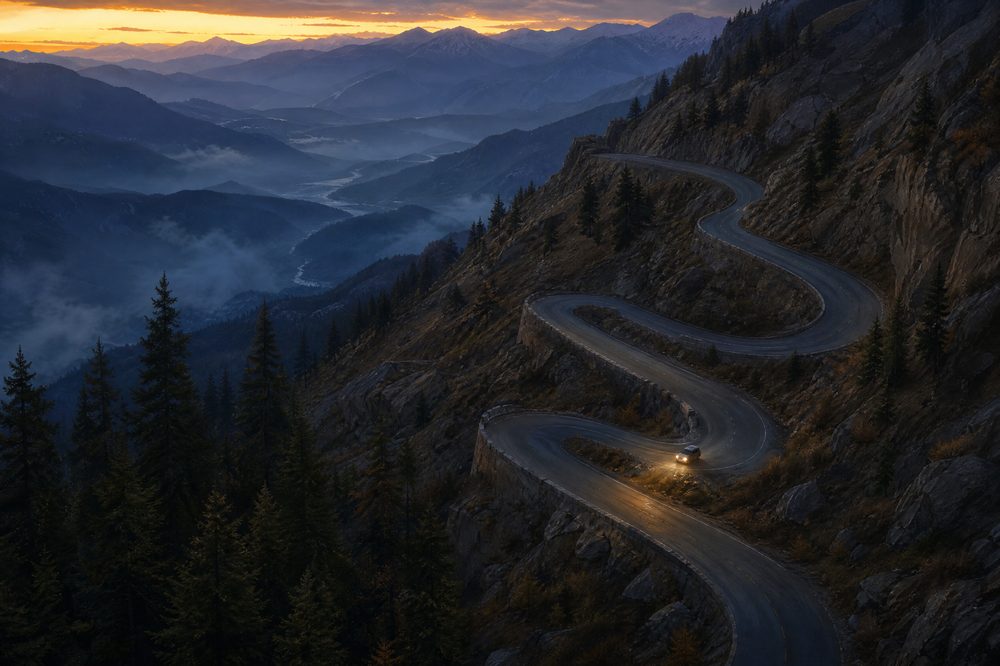
Weather, not time. Eleven of the nineteen games let you set an hour and only three let you set a sky. And the single most productive condition recorded anywhere in these logs is not a golden hour at all — it is clearing weather after rain, which appeared in Switchback Pass for one three-hour session and produced 11.5 per cent kept against that game's overall 4.1.
A time-of-day slider without weather control gives you the sun's angle and none of its interruptions. Clouds are what make a low sun interesting; a clean golden hour every day is a postcard, and six of these games produce exactly that.
Three games in the survey allow both, and all three sit in the top five for kept ratio. Three is not a finding. It is, however, the shape of the next issue.
A game with a genuinely useful midday. Nothing in nineteen games has produced one, and I have started to wonder whether it is possible — a high sun flattens everything it touches and every photographer avoids it for the same reason.
A concentrated game with a high kept ratio would also weaken the framing considerably. Harbour Watch comes closest at 9.1 per cent kept with sixty-four per cent of those frames in one hour, which suggests that concentration may simply be the correct behaviour and this whole survey is complaining that games have a best light.
Seventeen of nineteen games with a time-of-day control concentrate the majority of their usable frames into a single simulated hour, always near sunrise or sunset and never at midday. The two exceptions both lack a high sun rather than having better lighting. Concentration alone is a weak measure — Causeway is flat and terrible — and the control most of these games are actually missing is weather, which only three offer and all three of which sit in the top five for kept ratio.
Against roughly four per cent if light were evenly useful across a simulated day. Nineteen games surveyed.
Nominal means the slider exists and changes almost nothing, which is Causeway's category.