 Screenshot Quarterly
Games, framed
Screenshot Quarterly
Games, framed
Reviewed over 14 hours, twice through. No photo mode exists in this game, so every frame is a print-screen from ordinary play.
Screenshot Quarterly
Games, framed
Reviewed over 14 hours, twice through. No photo mode exists in this game, so every frame is a print-screen from ordinary play.
One fixed viewpoint per room, no free camera, no exposure control, nothing adjustable whatsoever. Two hundred and fourteen frames taken by pressing print-screen at the right moment, and twenty-two of them are still worth keeping.
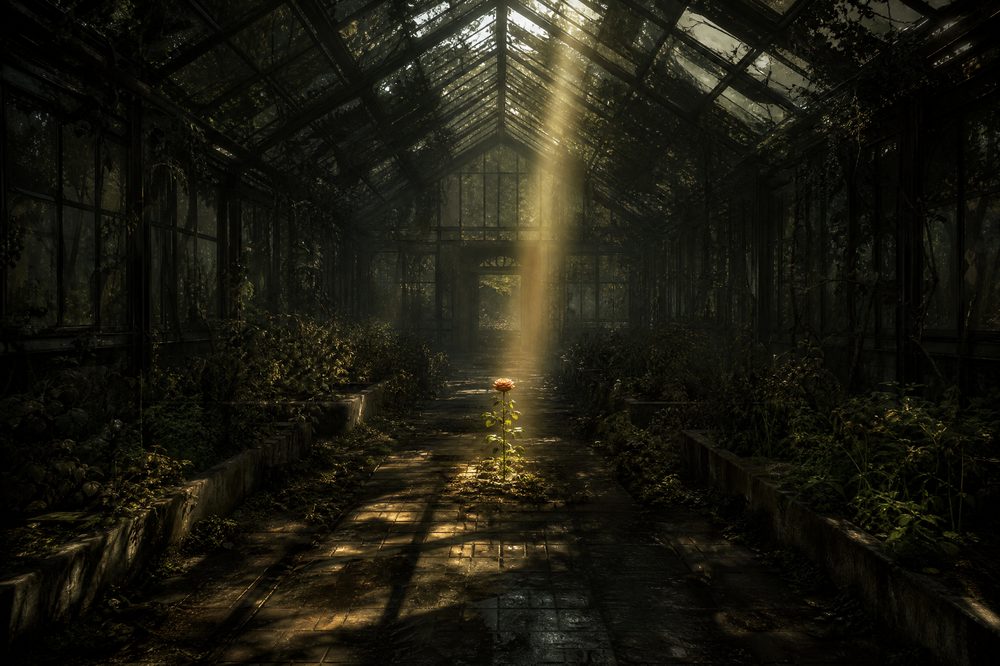
The temptation with a game like this is to call it a rebuke to photo modes, and that is not quite what it is. Glasshouse Rose does not withhold a camera as a statement. It withholds a camera because it is a fixed-perspective adventure game built room by room by people who decided where you would be standing before they decided what you would see, and photography was never on the table.
The result, measured the way this publication measures things, is the highest kept ratio in eleven issues. Twenty-two frames out of two hundred and fourteen survived a week, against Causeway's eleven out of nine hundred and one. That is a difference of roughly eightfold and it demands an explanation better than this game is prettier.
It is a composition somebody has already solved. Every room in this game is a single viewpoint with a chosen focal length, a chosen height, a chosen relationship between foreground clutter and the doorway you are heading for. There are about ninety of them and the weakest is competent.
What that means in practice is that a frame taken in Glasshouse Rose has already had the two hardest decisions made for it. You are not choosing where to stand and you are not choosing how wide to see. You are choosing only when — which figure is where, which light is falling, whether the rain has started.
Almost all of them are timing rather than framing. The glasshouse itself, from which the game takes its name, has a shaft of light that moves across the floor over about eleven minutes of real time; there is a window of perhaps forty seconds in which it strikes the surviving rose. Four of the twenty-two are that window, from four separate visits, and they are not identical because the rose is a physics object that moves.
Six more are weather. The game has three states and they arrive on a slow cycle, which means a room you have seen twice can present itself entirely differently on a third visit. The corridor of hanging chains under rain is a different photograph from the corridor of hanging chains in dry stillness, and both are compositions the studio authored.
Five are character positions during scripted moments, where a figure crosses the fixed frame and the game gives you a second and a half of good arrangement. These are the frames where the absence of a camera hurts most, because two of them are very slightly mistimed and there is nothing to be done about it.
| Source of the kept frame | Kept | Note |
|---|---|---|
| Moving light | 7 | Timing, repeatable |
| Weather state | 6 | Timing, not repeatable at will |
| Character crossing | 5 | Scripted, one attempt |
| Static composition | 4 | Available to anybody, any time |
Note the bottom row. Only four of the twenty-two are frames that any player would get simply by walking into the room. The other eighteen required being in the right place at the right moment, which is a skill, and it is the only photographic skill this game permits.
Take the camera away and photography becomes entirely about timing. Which is a narrower discipline, and a considerably harder one to fake.
The kept ratio here is inflated and I want to say so plainly. Two hundred and fourteen frames is a small denominator, and it is small because pressing print-screen in a fixed-camera game feels pointless most of the time. You do not take frames speculatively. You take them when something is happening.
In Causeway I took nine hundred frames partly because the tools invited experimentation — try it at 200mm, try it at f/2, try it from twelve feet higher. Most of those experiments failed, and every failure entered the denominator. Glasshouse Rose has no experiments available, so its denominator contains only deliberate attempts.
Adjust for that and the gap narrows considerably. It does not close: eighteen of the twenty-two kept frames here would have failed in a game with flat light, and none of Causeway's six hundred wide landscapes would have succeeded in a game with better lighting than its own. But the eightfold figure is an artefact of method as much as a finding, and Criteria now says so.
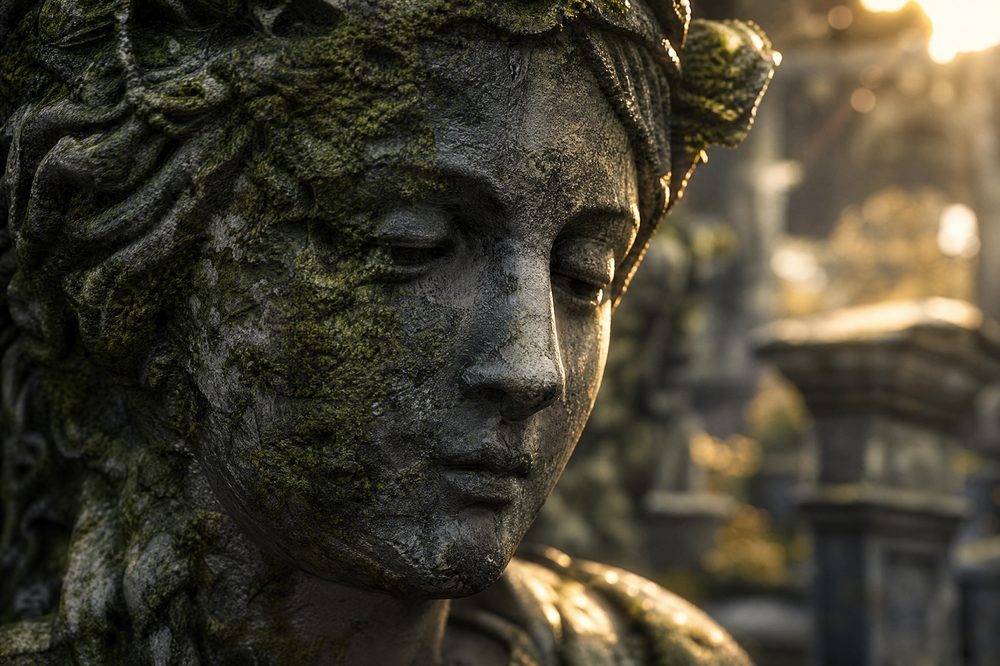
Nothing, but only because nothing is on offer. The HUD-hide binding is hold-to-activate rather than a toggle, which means one hand is occupied at the moment of capture, and there were two frames I lost to that. The game does not pause when you print-screen, obviously, so anything moving is a gamble.
There is also no in-game gallery, no capture folder, no metadata. Whether that matters depends entirely on whether you consider this a game with a photographic dimension at all, and the studio evidently does not.
For photography, yes, and for very little else. The fixed perspective in Glasshouse Rose costs the game real things — spatial orientation is poor, two puzzles are harder than intended because you cannot look up, and the final act's larger rooms feel cramped in a way the smaller ones do not.
What it buys is a guarantee. Every single moment you are shown has been composed by somebody who cared, which no open-camera game can promise and none of the other five games in this issue do. Causeway will let you find a bad angle in a beautiful place nine hundred times. This game will not let you find one at all.
The lesson for a studio shipping a photo mode is not remove the camera. It is that the camera is the last five per cent, and Glasshouse Rose spends its entire budget on the other ninety-five.
No camera, no controls, no photographic dimension the studio would acknowledge, and the highest kept ratio this publication has recorded. Ninety fixed viewpoints composed before the player arrives, three weather states and light that moves on its own schedule, which together reduce photography to timing and make timing sufficient. The figure is inflated by a small denominator and the finding survives the adjustment.
All by print-screen during ordinary play. Twenty-two survived review, and eighteen of those depended on timing rather than position.