 Screenshot Quarterly
Games, framed
Screenshot Quarterly
Games, framed
Reviewed over 26 hours. Sixteen of the twenty-one kept frames were taken beyond 85mm, which is the whole review in one sentence.
Screenshot Quarterly
Games, framed
Reviewed over 26 hours. Sixteen of the twenty-one kept frames were taken beyond 85mm, which is the whole review in one sentence.
Twenty-four to one hundred and thirty-five millimetres, a focus plane you place by eye, and a world of ruins built out of layered stone that separates properly under compression. Twenty-one keepers from two hundred and sixty-seven frames, and sixteen of them are long.
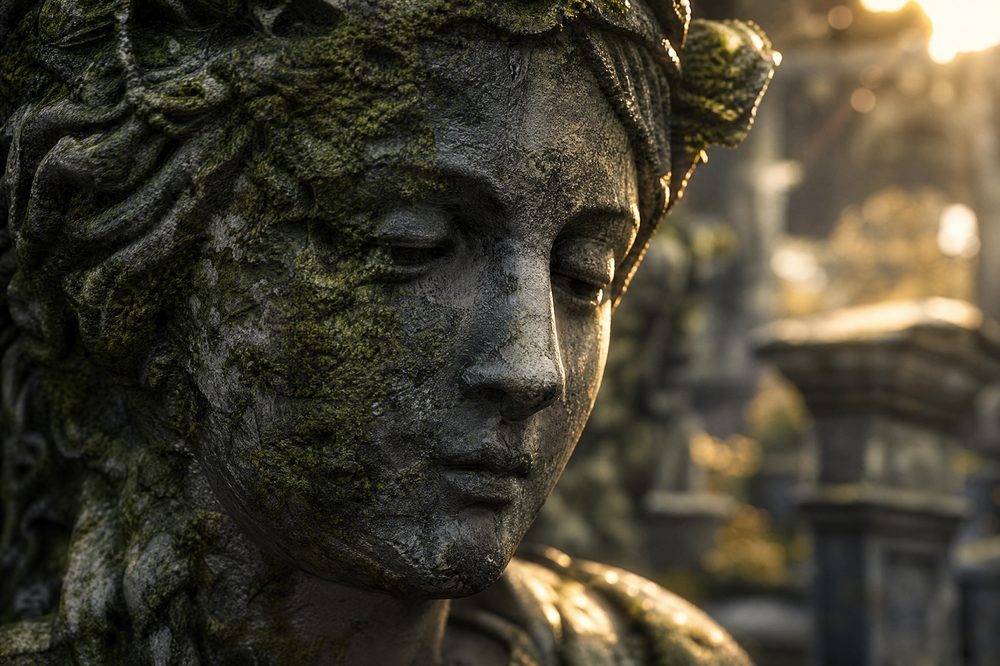
Almost every photo mode ever shipped is a wide-angle photo mode. It will let you go wider — often absurdly so, out to fisheye territory — and it will let you move closer, and it will call the combination of those two things a focal length control. Very few games let you actually get longer than the eye, and the ones that do usually stop somewhere around 60mm.
Moss And Marble goes to 135mm. Not as a novelty, not with a warning about performance, and not with the depth cues quietly falling apart at the long end. It works, it is stable, and it changes what the game is for.
It compresses. Two objects fifteen metres apart, photographed at 24mm, are unmistakably fifteen metres apart — the near one looms, the far one recedes, and the geometry announces the distance. At 135mm the same two objects sit almost on top of each other, and the image becomes a flat arrangement of shapes rather than a description of a space.
This is the single most powerful compositional tool in photography and it is nearly absent from games. Moss And Marble's ruins are built out of repeated verticals — columns, pilasters, fallen drums, cypresses — and at 135mm those verticals stack into patterns you cannot see from any position at any wide angle, because the widening always separates them again.
Every frame in the log records its focal length, which makes this the cleanest dataset the publication has produced.
| Focal length | Frames taken | Kept | Rate |
|---|---|---|---|
| 24–35mm | 112 | 2 | 1.8% |
| 50mm | 44 | 3 | 6.8% |
| 85mm | 51 | 6 | 11.8% |
| 135mm | 60 | 10 | 16.7% |
A near-tenfold difference in kept rate between the widest band and the longest, on the same subject matter, in the same light, by the same person, in one game. I have been looking for a figure like that for eleven issues.
The wide angle shows you where you are. The long lens shows you what is there. Games are almost universally built for the first and almost never equipped for the second.
The obvious objection is that I favour long lenses and the log therefore reflects my taste rather than the tool. That is partly true and it is why the table above reports frames taken as well as kept: I took a hundred and twelve wide frames and sixty long ones, so if this were purely preference the denominators would be reversed.
Seven for the world, which is the lowest score I have given to a game whose photographs I like this much, and the reason is light again. Moss And Marble has one very good hour — a low warm sun that rakes across the stone and finds every carved edge — and it has it exactly twice per in-game day, with no override.
Nineteen of the twenty-one keepers are from those windows. The middle of the day is a flat wash almost as bad as Causeway's overcast, and the night has no moonlight worth the name. A game this well-equipped optically has no business rationing its own light, and a time-of-day slider would have moved this score to nine.
The other real complaint is vegetation. The moss and ivy that give the game its name are gorgeous at any distance and completely static, which at 135mm and f/2.8 becomes obvious — a wash of soft bokeh that never moves reads as a painted backdrop rather than as depth. Six frames in the log were discarded specifically for that.
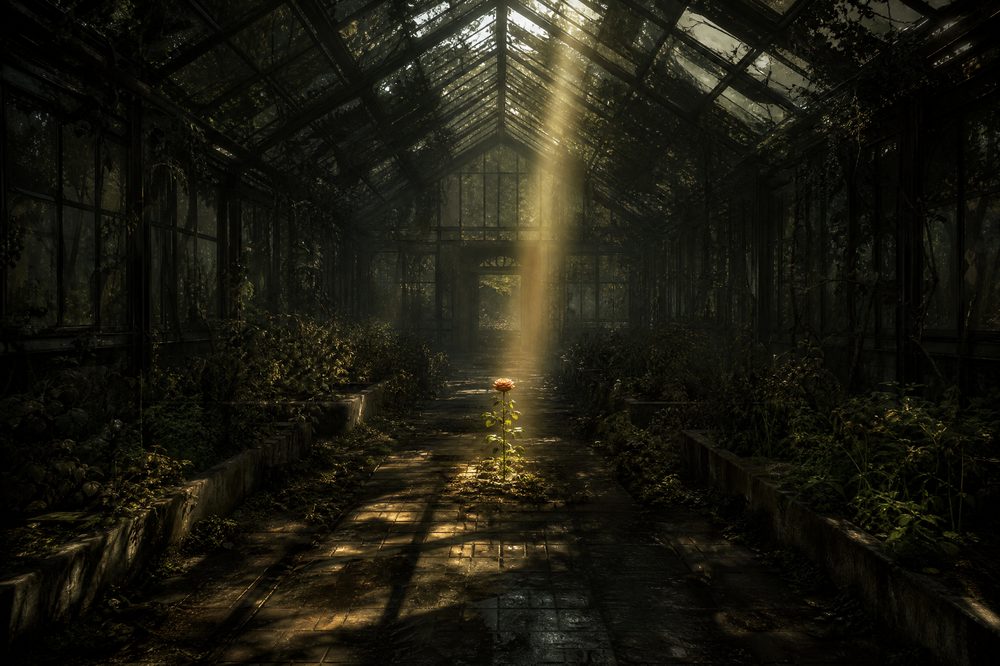
A little, and it is handled well. The photo mode pauses the world but not the clock on the excavation timer, which means a long composition costs you progress in the one system that has a deadline. That is a real cost, clearly signposted, and it made me choose my moments — which improved the frames.
The mode cannot be opened during the two chase sequences, and there is a five-second lockout after any fall. Both are sensible. Nothing else is restricted, and the interface hides completely with a toggle rather than a hold.
Not the lens, though yes, the lens. The thing to copy is the focus plane. In almost every game with an aperture control, focus is a slider you drag until something looks sharp, which means you are adjusting a number and watching for a result. Moss And Marble lets you look at the thing you want sharp and press a key, and the plane goes there.
It sounds like a small interface decision. In practice it is the difference between fifteen seconds of fiddling per frame and none, and across two hundred and sixty-seven frames it is the reason this log has any long shallow compositions in it at all. Nobody would have taken sixty frames at 135mm and f/2.8 with a slider.
A genuine 24–135mm range with an eye-placed focus plane, applied to ruins built out of exactly the repeated verticals that reward compression. Kept rates rise from 1.8 per cent at 24mm to 16.7 per cent at 135mm on the same subjects, which is the strongest single piece of evidence this publication has recorded for anything. Held back by rationed light and static vegetation that betrays itself under shallow focus, and still the best-equipped camera of the year.
Every frame logged with its focal length. Twenty-one kept, sixteen of them beyond 85mm, ten at the long limit.